25 November 2026 — Ramzi Chamat
Geneva Real Estate: Tax and Regulatory Updates for Late 2026
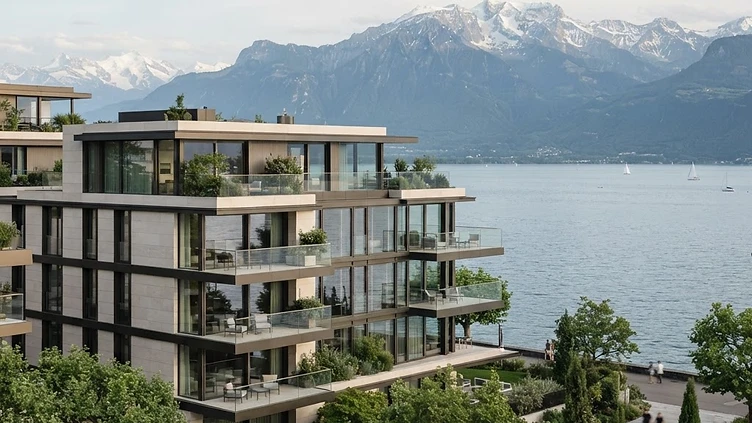

Navigating the regulatory and tax landscape in Geneva requires specialized expertise due to the frequency of legislative changes. As we reach the end of 2026, both property owners and prospective buyers must account for major shifts, ranging from the reform of the imputed rental value to new provisions within the LDTR. At OAKSWELL, our role as your Geneva real estate broker is to guide you through these legal complexities with clarity to ensure every step of your transaction is secure.
The End of Imputed Rental Value: A Structural Reform for 2029
The abolition of the imputed rental value tax, approved by voters in September 2025, will officially take effect on January 1, 2029, as confirmed by the Federal Council on April 1, 2026 [1, 7]. This reform fundamentally alters the taxation of owner-occupiers [1, 4]:
- Abolition of imputed rental value taxation for primary and secondary residences [1, 7].
- End of maintenance cost deductions for owner-occupied homes [1, 7].
- Strict limitation on mortgage interest deductions, now correlated to the proportion of rented properties within total assets [1, 7].
- Exception for primary residences: A temporary interest deduction will be maintained for 10 years, capped at CHF 10,000 for married couples (CHF 5,000 for single persons) in the first year, with a 10% annual reduction [1].
It is crucial to anticipate these changes. The current regime remains in force until the end of 2028, allowing for the continued deduction of maintenance costs and mortgage interest under existing rules [1, 4, 7].
Evolution of the LDTR: Facilitating Home Ownership
The Geneva legal framework has seen a notable evolution with the modification of the Law on Demolitions, Transformations, and Renovations (LDTR) [9]. The objective is to facilitate the purchase of a currently occupied dwelling by its tenant [9]. Conditions, previously highly restrictive, have been eased to allow for more fluid transactions, provided strict criteria are met [9]:
- The tenant must have occupied the dwelling for at least three years [9].
- The buyer commits to residing in the property for at least five years following the purchase [9].
- The sale price is capped, calculated based on the average prices of condominium (PPE) operations in development zones over the previous three years [9].
This measure aims to meet the strong demand from Geneva residents wishing to become homeowners without leaving their familiar living environment [9].
New Obligations for Brokers: The AMLA
Since October 1, 2026, the revision of the Anti-Money Laundering Act (AMLA) has imposed new control and documentation obligations on real estate professionals. As a Geneva real estate agency, OAKSWELL applies these rigorous standards to ensure the transparency and security of your transactions. These obligations apply particularly when the seller and buyer have expressed their intent to conclude the sale, with specific exceptions such as the purchase of a home intended for the buyer's own use.
Key Takeaways
- The Geneva real estate tax landscape is preparing for a major turning point in 2029 with the end of the imputed rental value [1, 7].
- The revision of the LDTR opens new perspectives for tenants wishing to acquire their current home [9].
- Regulatory compliance, particularly via the AMLA, has become an essential pillar for the security of real estate transactions.
Frequently Asked Questions
Can I still deduct my maintenance work before 2029?
Yes, maintenance costs remain deductible until the end of the 2028 tax period. It is advisable to plan necessary work before this deadline [1, 4, 7].
Does the abolition of the rental value also concern secondary residences?
Yes, the reform also applies to secondary residences. However, cantons retain the possibility of introducing a special real estate tax on these properties to compensate for lost revenue [1, 7].
How is the real estate capital gains tax (IBGI) calculated in Geneva?
The IBGI is calculated on the difference between the sale price and the purchase price (including costs and value-adding improvements). The rate is regressive based on the duration of ownership, ranging from 50% for ownership of less than 2 years to 2% after 25 years.
Sources
- Federal Tax Administration (FTA): Reform of housing taxation [7].
- Republic and Canton of Geneva (ge.ch): Legislative news 2026 [9].
- USPI Geneva: Notes on AMLA and the LDTR [9].
- PostFinance: What will change following the abolition of the rental value (October 2026) [1].
Entrusting your project to OAKSWELL means benefiting from local expertise and constant regulatory monitoring. Whether you wish to sell your property or invest, we accompany you with discretion and professionalism. Contact us today for a free, personalized property valuation.