21 October 2026 — Ramzi Chamat
Real Estate Regulations and Taxation in Geneva: 2026 Guide
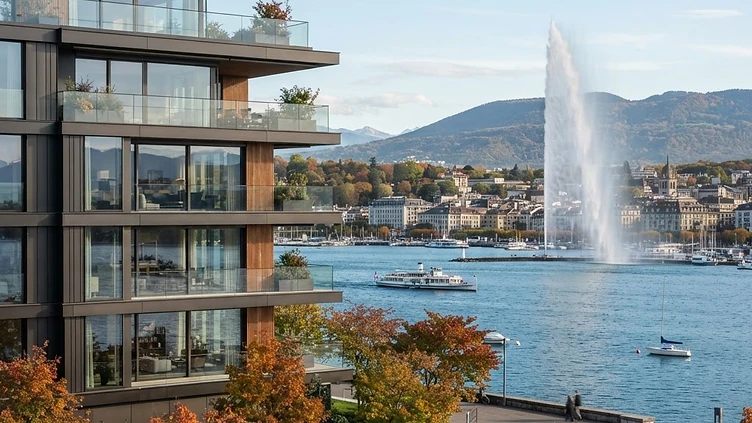

Navigating the regulatory and fiscal landscape in Geneva requires specialized expertise, as local specificities influence every transaction. As a leading real estate agency in Geneva, OAKSWELL supports owners and buyers daily in understanding these complex mechanisms, from the LDTR to the nuances of real estate gains tax. A precise command of these rules is essential to secure your projects, whether you are selling a villa in Geneva or purchasing an apartment in the canton.
Real estate taxation in Geneva: A specific framework
The Swiss tax system, organized across three levels (federal, cantonal, and communal), requires particular vigilance in Geneva. Unlike other cantons, Geneva applies strict rules regarding registration duties. The tax on real estate gains (IBGI) varies according to the duration of ownership: it stands at 50% for a duration of less than 2 years, decreasing progressively to a floor rate of 10% after 25 years of ownership. This degressive structure is a major strategic lever for any owner wishing to sell their property in Geneva.
LDTR and land use planning
The Law on Demolitions, Transformations, and Renovations of Residential Houses (LDTR) remains a central pillar of Geneva's housing policy. It aims to protect the existing rental stock and strictly regulates transformation projects. For an owner, anticipating the constraints linked to the LDTR is crucial before considering major works or a sale. Simultaneously, development zones impose precise urban planning rules that dictate the buildability and density of projects, directly influencing the market value of land and buildings.
Key points for owners and buyers
- Rental value: This remains an essential component of income taxation, even as debates regarding its potential abolition continue at the federal level.
- Transfer duties: In Geneva, real estate donations in the direct line are exempt from inheritance tax but remain subject to registration duties ranging from 1.8% to 3% depending on the degree of kinship.
- Energy performance: New requirements regarding energy-efficient renovations are becoming decisive criteria in the negotiation of real estate prices in Geneva.
Key takeaways
The complexity of the Geneva market should not be a barrier, but an element to integrate into your strategy. Knowledge of the IBGI, LDTR constraints, and cantonal tax specificities allows you to optimize the profitability of your investment or the sale price of your property. OAKSWELL places its network and local expertise at your service to navigate this regulatory framework with peace of mind.
Frequently asked questions
How does the holding period influence real estate gains tax?
In Geneva, the tax is degressive: the longer you hold the property, the lower the tax rate, dropping from 50% for short-term ownership to 10% after 25 years.
Does the LDTR apply to all types of properties?
The LDTR primarily concerns residential houses and aims to protect the rental stock. It requires specific authorizations for any transformation or demolition.
Why consult a real estate broker in Geneva for these matters?
An expert broker masters local fiscal and regulatory subtleties, helping you avoid costly errors during a property valuation in Geneva or final negotiations.
Sources
- Pilet & Renaud, Property taxation in Geneva.
- République et canton de Genève (ge.ch), administrative procedures and housing votes, 2026.
- FGP Swiss & Alps, Property gains tax calculation, 2025.
- OAKS GROUP SA, Understanding the real estate gains tax (IBGI) in Geneva, 2024.
Confide your project to OAKSWELL to benefit from personalized and confidential analysis. Whether you wish to obtain a property valuation in Geneva or require assistance with your search, our experts are at your disposal to turn your objectives into success. Contact us today for an initial consultation.